
Hyundai
Ioniq 9
$7,500 federal tax credit eligible
Models
Review summary powered by Claude
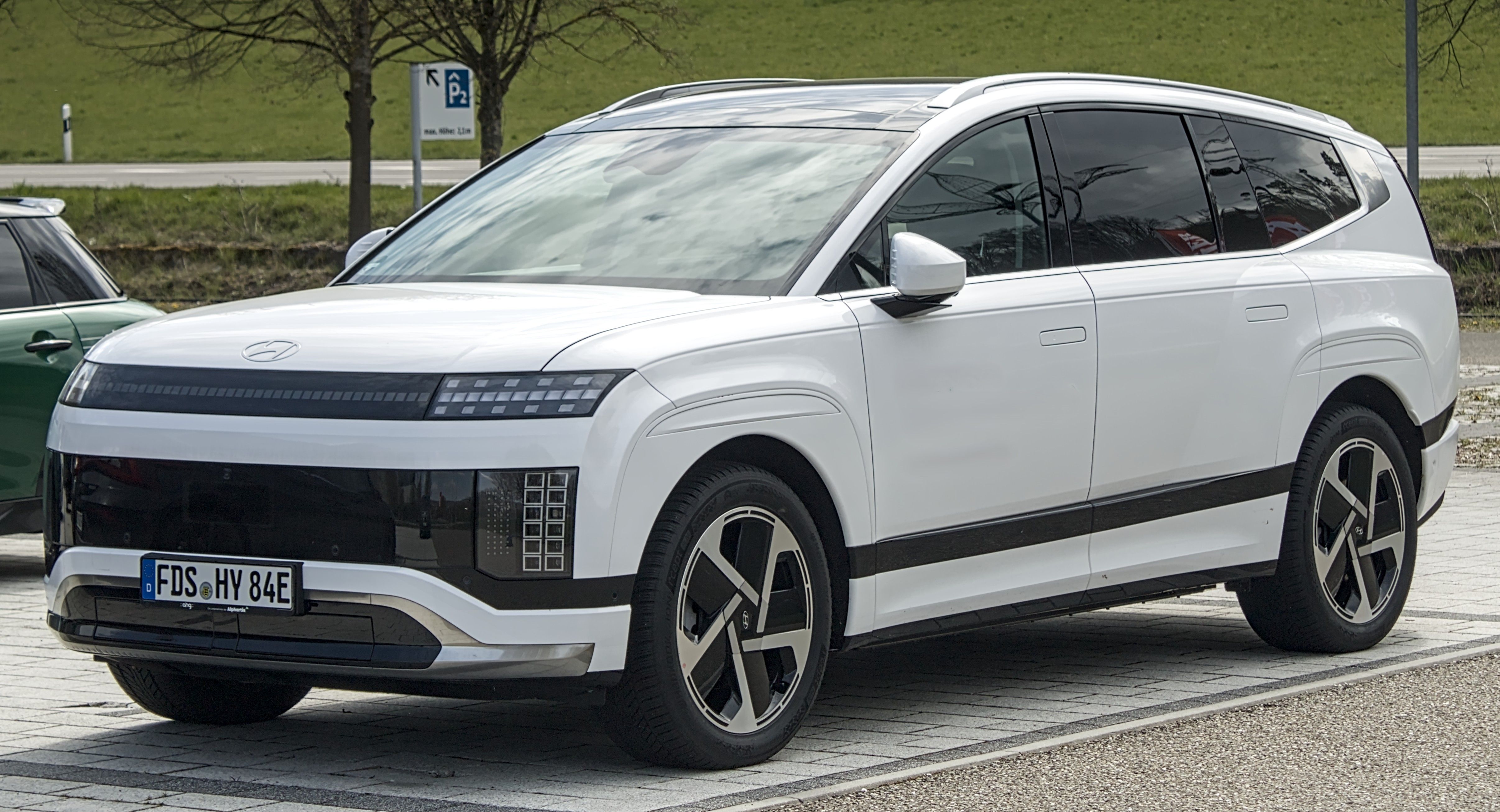
The Hyundai Ioniq 9 is a three-row electric SUV slotting above the Ioniq 5 and Ioniq 6 to compete directly with the Kia EV9, Rivian R1S, and upcoming Volkswagen ID. Buzz. Built on Hyundai's 800-volt E-GMP platform, it seats up to seven and offers a wide trim spread from a 215-hp rear-wheel-drive base to a 422-hp dual-motor range-topper. Reviewers most frequently highlight its spacious, lounge-like interior and the S RWD trim's class-leading 335-mile EPA range as immediate differentiators in a still-sparse three-row EV segment.
Strengths
- S RWD trim delivers 335 miles of EPA-rated range, the longest of any configuration and competitive with most rivals in the segment
- Third-row space is notably generous for the class, with reviewers citing usable legroom even for adults rather than the token accommodation common in mid-size SUVs
- 800-volt architecture enables DC fast charging at up to 350 kW, allowing the vehicle to accept high charge rates that can meaningfully reduce charging stops on long trips
- Limited and Calligraphy AWD trims reach 0-60 mph in 5.2 seconds with 422 hp, providing brisk performance without moving into a premium performance price tier
- Hyundai's second-row swivel seats (available on higher trims) received consistent praise from reviewers for enabling face-to-face seating, a feature uncommon in production three-row EVs
Considerations
- AWD trims sacrifice meaningful range — the SE AWD drops to 320 miles and both AWD performance trims fall to 311 miles, a 24-mile penalty versus the base RWD for buyers who need all-wheel traction
- The S RWD's 8.4-second 0-60 time is noticeably leisurely relative to the segment norm, which may disappoint buyers cross-shopping quicker rivals like the Kia EV9 Standard Range
- At $76,590, the Calligraphy trim approaches Rivian R1S Adventure territory, where some reviewers note the Hyundai's exterior styling reads as conservative and less distinctive for the price
- As a freshly launched model, long-term reliability data and real-world charging network compatibility reports are not yet established, introducing more ownership uncertainty than incumbent rivals