
GMC
Hummer EV SUV
Models
Review summary powered by Claude
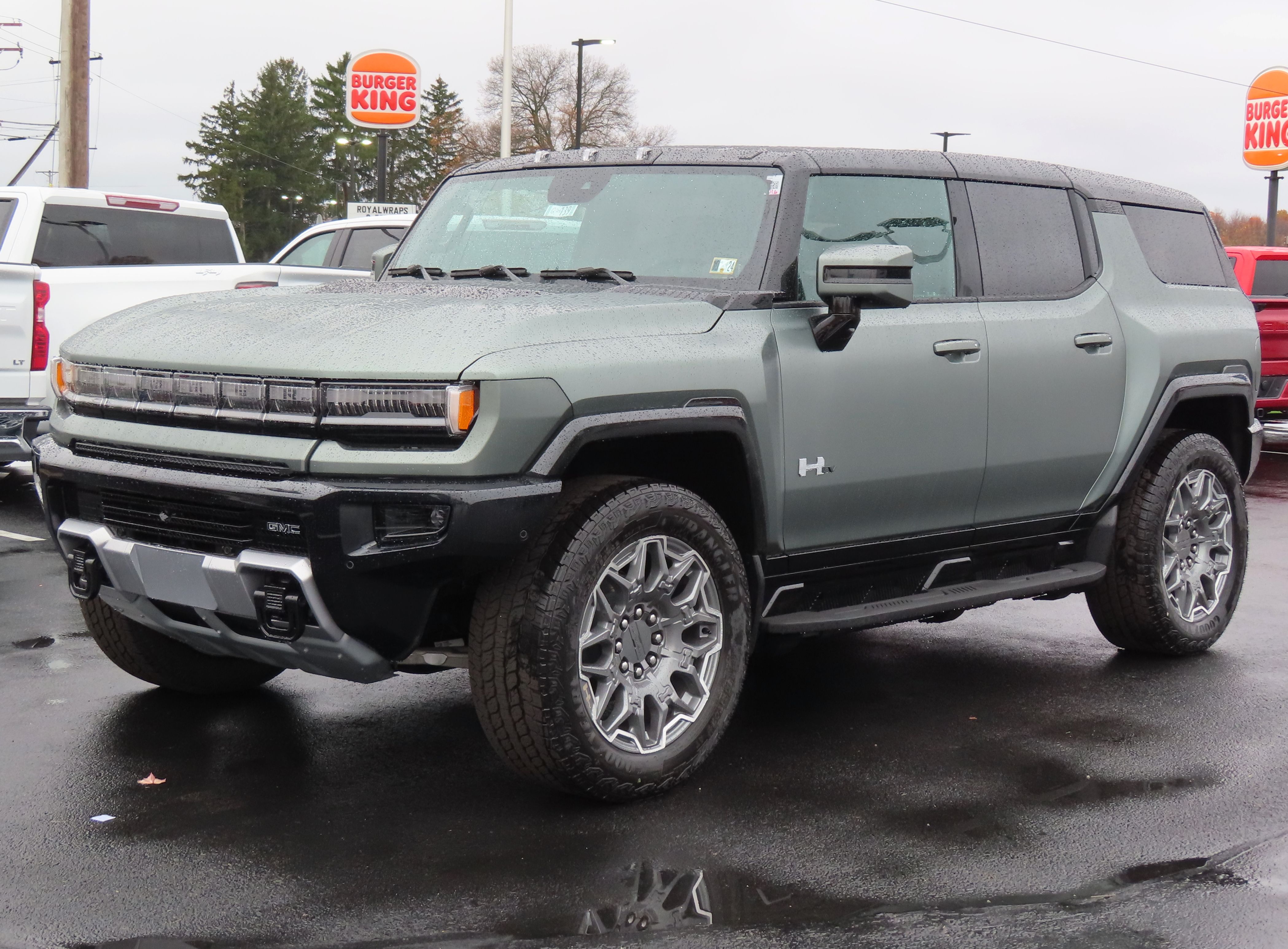
The GMC Hummer EV SUV is a full-size electric off-roader that occupies a niche essentially of its own making: a luxury truck-based SUV priced near six figures with military-inspired styling and genuine technical ambition. Reviewers at MotorTrend and Car and Driver consistently highlight its Extract Mode air-suspension-aided CrabWalk diagonal driving capability and the 3X trim's 830-horsepower tri-motor powertrain as genuinely novel features rather than marketing novelties. It competes loosely with the Rivian R1S but skews heavier, more theatrical, and more expensive.
Strengths
- 3X tri-motor produces 830 hp and hits 0–60 mph in 3.5 seconds — exceptional for a vehicle weighing over 9,000 lbs
- CrabWalk four-wheel steering mode and Extract Mode suspension lift enable off-road maneuverability that reviewers at MotorTrend confirmed works as advertised in real trail conditions
- Watts to Freedom launch-control mode on the 3X delivers repeatable, consistent acceleration runs without notable power fade
- Removable roof panels and open-air driving experience are a distinctive feature not offered by any direct EV competitor
- Ultifi-based 13.4-inch infotainment system with Super Cruise hands-free driver assistance is among the more capable setups in GM's lineup
Considerations
- EPA-rated 303 miles of range on both trims is modest relative to the price point; real-world range drops considerably when driving at highway speeds or using four-wheel drive aggressively
- Curb weight exceeding 9,000 lbs makes handling ponderous on-road and causes significant tire wear, a concern noted by Car and Driver long-term testers
- Starting price of $98,845 for the 2X and $106,945 for the 3X places it well above the Rivian R1S and Ford F-150 Lightning, with interior material quality that reviewers note does not fully justify the premium
- Charging infrastructure for a vehicle with this energy demand remains a practical limitation; DC fast charging is capped at 350 kW but real-world sustained rates are often lower