
Nissan
Leaf
$7,500 federal tax credit eligible
Models
Review summary powered by Claude
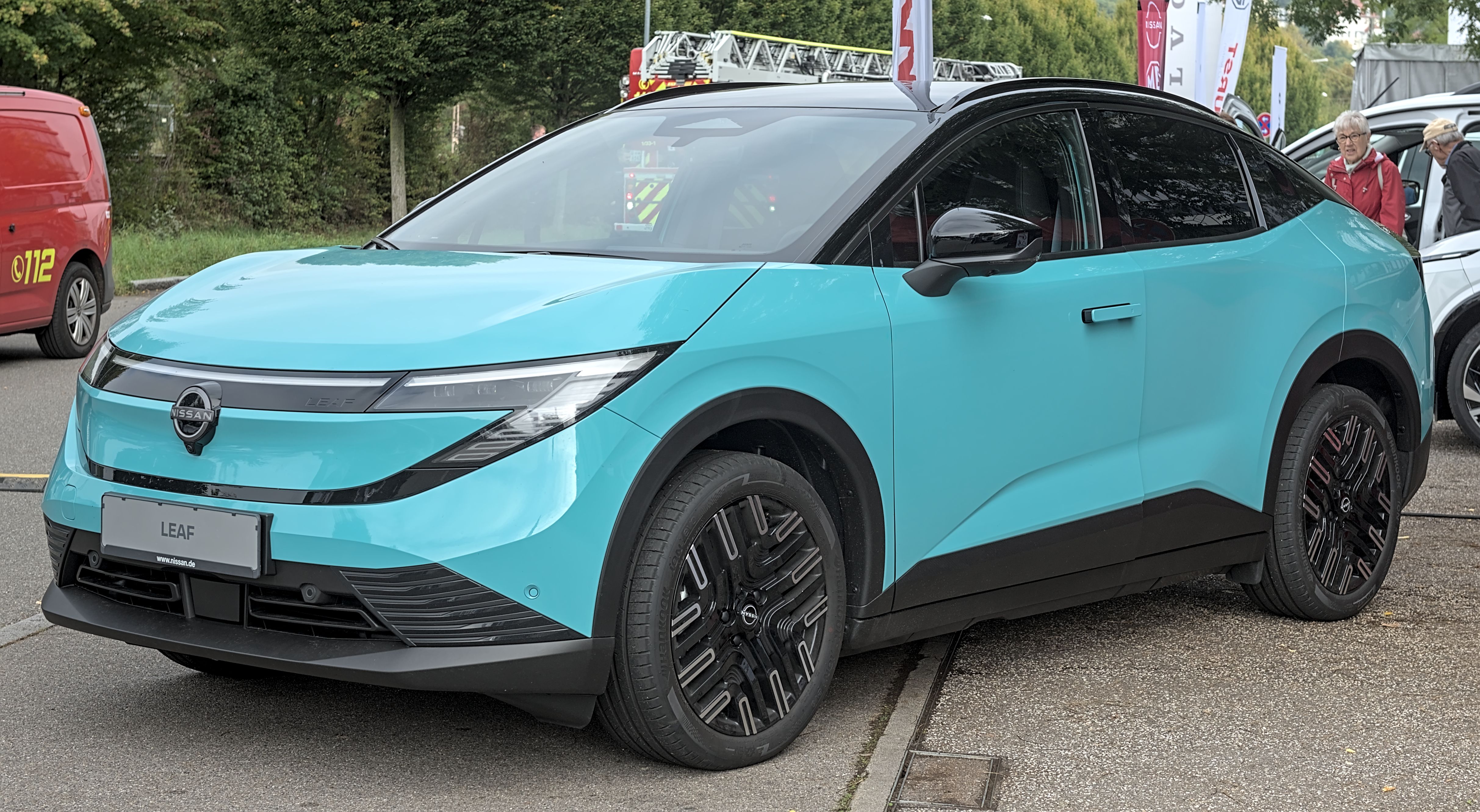
The Nissan Leaf is one of the longest-running purpose-built EVs on the market, having launched in 2010 and since accumulated a broad ownership base and well-documented track record. It competes in the affordable EV segment against the Chevrolet Bolt EV and entry-level Tesla Model 3, offering two distinct powertrain options across its S and SV Plus trims. Reviewers consistently cite its mature, livable interior ergonomics and competitive base price as core strengths, while its CHAdeMO DC fast-charging standard and the S trim's modest 149-mile range draw recurring criticism.
Strengths
- Base S trim starts at $28,140, undercutting many rivals and remaining eligible for federal tax credits depending on buyer eligibility
- SV Plus delivers 214 hp and a 0–60 time of 6.6 seconds, which Car and Driver and InsideEVs note as meaningfully brisk for an affordable front-drive EV
- Ride quality is tuned for comfort, with Edmunds and MotorTrend praising the Leaf's composed, well-damped feel on rough urban roads
- ProPilot Assist (available on SV Plus) provides genuine highway hands-on-wheel semi-autonomous driving that reviewers rate as one of the better systems in this price class
- Established reliability record and widespread Nissan dealer service network reduce ownership friction compared to newer EV brands
Considerations
- S trim's 149-mile EPA range is below average for the segment in 2024, where competitors like the Chevrolet Bolt EV offer 259 miles at a similar price
- CHAdeMO DC fast-charging port is an industry-orphaned standard with a rapidly shrinking public charging infrastructure in North America
- No heat pump is offered on any trim, which owners and reviewers note causes meaningful range loss in cold climates compared to competitors that include it
- SV Plus at $36,190 approaches pricing for longer-range competitors, weakening the Leaf's value case at the upper trim level