
Chevrolet
Blazer EV
$7,500 federal tax credit eligible
Models
Review summary powered by Claude
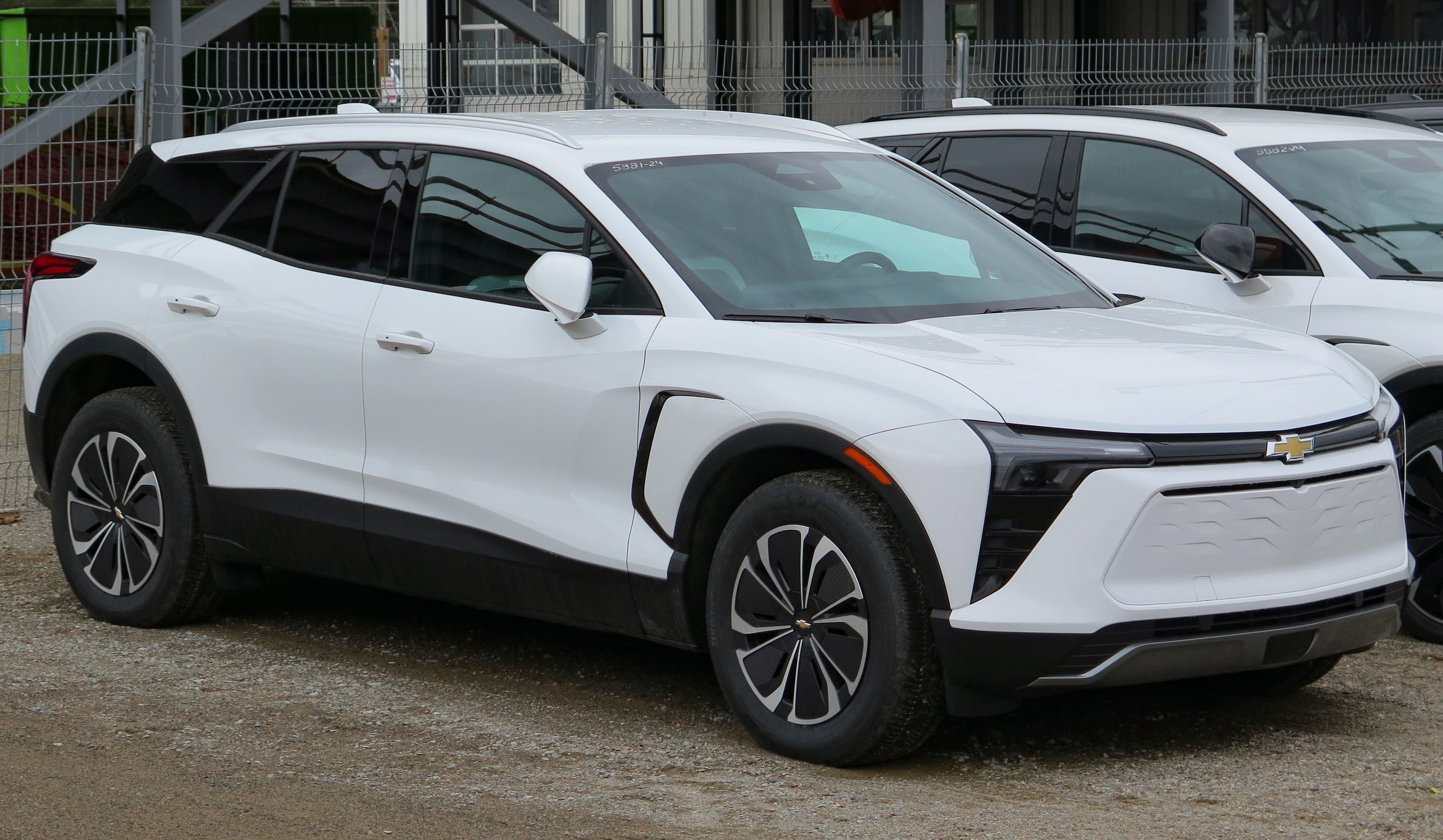
The Chevrolet Blazer EV slots into GM's Ultium-based lineup as a midsize crossover targeting the Tesla Model Y and Ford Mustang Mach-E. It arrived to a rocky launch marred by software issues that prompted a temporary sales halt in early 2024, which colored early reviewer impressions. Once updated, critics recognized it as a genuinely competitive package with a broad trim range spanning an approachable $44,600 LT to a 615-hp SS. Its interior tech and available rear-wheel-drive RS configuration stand out as the most frequently praised attributes.
Strengths
- Wide trim range covers multiple use cases: the FWD LT starts at $44,600 with a class-competitive 334-mile EPA range, while the SS delivers a 3.4-second 0–60 at $61,790
- The RS RWD at $50,195 achieves the longest range in the lineup at 324 miles while offering 365 hp and a 6-second 0–60, a combination few competitors match at the price
- Interior features a 17.7-inch diagonal infotainment screen and an 11-inch driver display, which reviewers at Car and Driver and MotorTrend noted as genuinely responsive and well-laid-out compared to segment rivals
- Dual-motor AWD SS produces 615 hp with a verified sub-3.5-second 0–60, earning comparisons to performance-oriented EVs costing significantly more
- DC fast charging is standard across trims, with the Ultium platform supporting up to 190 kW on compatible hardware
Considerations
- Software instability at launch led to a formal sales halt in January 2024 and left early adopters dealing with over-the-air update delays, undermining initial confidence in the platform
- Adding AWD to the LT or RS trims drops EPA range to 283 miles, a meaningful penalty compared to the RWD RS or LT FWD figures
- Rear seat and cargo space are modest relative to the body size, with InsideEVs and Edmunds noting the sloping roofline cuts into headroom for taller rear passengers
- The SS trim's 303-mile range trails the cheaper RS RWD by 21 miles despite costing over $11,000 more, making its value proposition narrowly focused on outright performance