
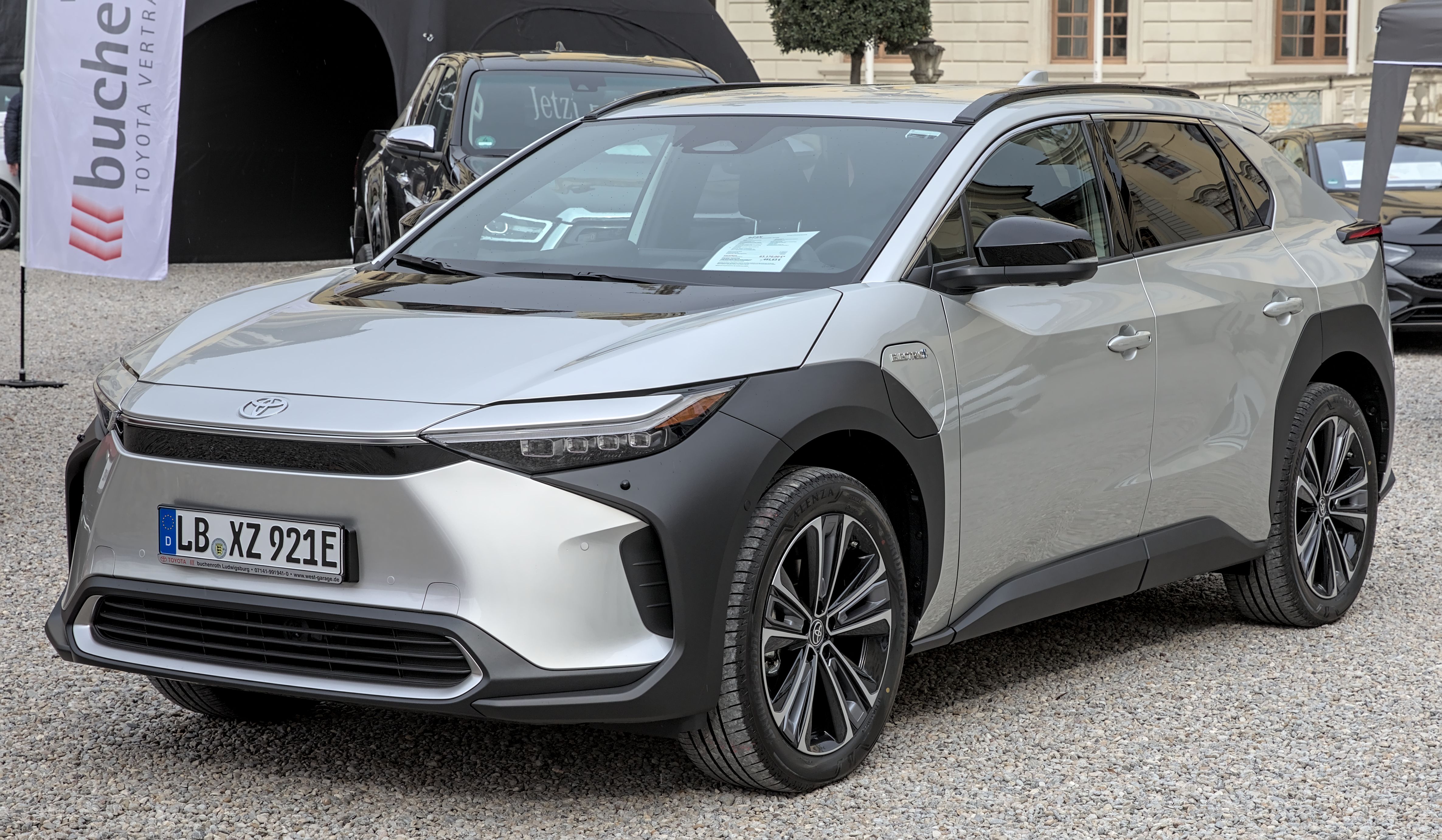
Toyota
bZ4X
Models
Review summary powered by Claude
The Toyota bZ4X is Toyota's first purpose-built battery-electric SUV, arriving in a crowded compact crossover segment occupied by the Hyundai Ioniq 5, Ford Mustang Mach-E, and Volkswagen ID.4. Built on a shared platform with the Subaru Solterra, it emphasizes familiar Toyota refinement and reliability credibility over outright performance or segment-leading range. Reviewers consistently note its polished, quiet cabin and conservative styling, though many flag its underwhelming efficiency figures and unconventional steering setup as notable friction points for buyers cross-shopping more aggressive rivals.
Strengths
- Cabin quality and noise isolation are frequently praised by reviewers at Edmunds and Car and Driver as above average for the price bracket
- Dual-motor AWD trims deliver a 0-60 time of 6.5 seconds at a $45,070 starting point, offering reasonable all-weather capability without a significant performance premium
- Toyota's manufacturing reputation and dealer network provide reassurance for buyers skeptical of EV long-term reliability, a factor MotorTrend reviewers specifically acknowledge
- Ride comfort on the standard suspension is consistently described as composed and well-damped for a daily-use crossover
- Available solar roof panel on higher trims adds a modest range supplement and reduces climate pre-conditioning load, a feature not commonly offered by direct competitors
Considerations
- EPA range of 252 miles on the FWD XLE and 222 miles on both AWD trims trails key rivals such as the Ioniq 5 and Mach-E at comparable price points
- The yoke-style steering wheel, standard on all trims, has drawn repeated criticism from Car and Driver and InsideEVs testers for being awkward during low-speed maneuvering and parking
- DC fast charging is capped at 150 kW, and real-world charging curve behavior has been noted as inconsistent compared to vehicles using more modern battery thermal management systems
- At $49,070 for the Limited AWD, the value proposition weakens against competitors offering more range, faster charging, or more interior technology at a similar or lower price