
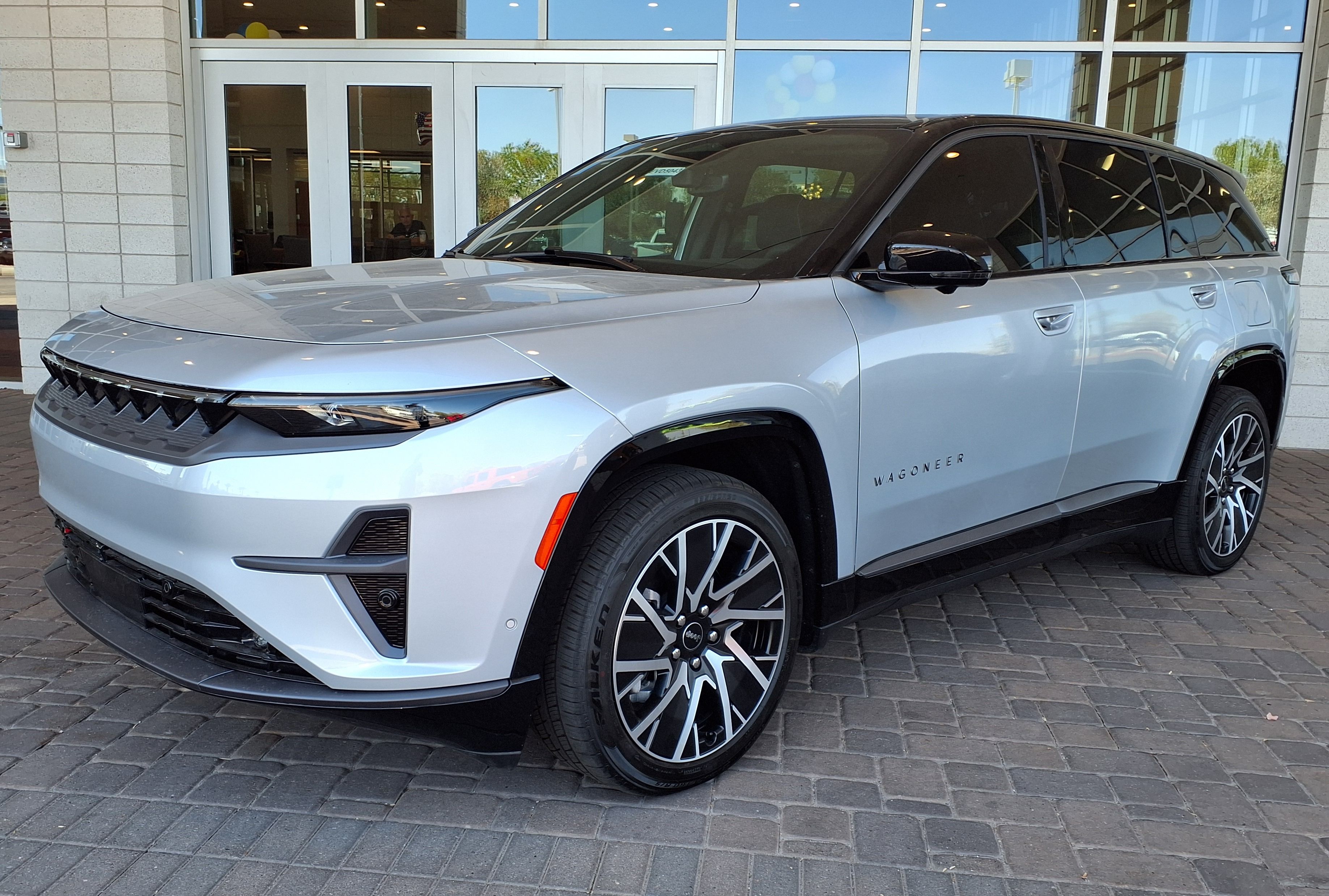
Jeep
Wagoneer S
$7,500 federal tax credit eligible
Models
Review summary powered by Claude
The Jeep Wagoneer S is Stellantis's first serious attempt at a premium electric SUV, slotting into a competitive segment alongside the Kia EV9, BMW iX, and Rivian R1S. Built on a dedicated EV platform and priced from $65,200, it arrives with genuinely strong performance credentials for the class. Reviewers at outlets like MotorTrend and Car and Driver have noted that the Wagoneer S successfully modernizes Jeep's styling language while delivering a driving experience that punches above its price point, though some question whether its feature set justifies the badge premium.
Strengths
- Dual-motor AWD system produces 600 hp and a 0–60 mph time of 3.4 seconds, which rivals performance-oriented competitors costing significantly more
- EPA-rated 303 miles of range places it near the top of its class and above many similarly priced two-row electric SUVs
- Interior materials and fit-and-finish received notably positive remarks from Car and Driver reviewers, representing a clear step up from Jeep's traditional ICE interiors
- Large portrait-oriented infotainment screen and available hands-free driver assistance features are competitive with German luxury rivals at the Limited trim's $65,200 price point
- Ride quality described by MotorTrend testers as composed and well-damped for a performance-tuned SUV, avoiding the stiff compromise common in high-output EVs
Considerations
- Limited off-road capability compared to traditional Jeep products — the Wagoneer S is road-focused and lacks the low-range hardware or serious ground clearance associated with the Wrangler or Wagoneer lineage
- Cargo volume and third-row seating are absent, putting it at a disadvantage against three-row electric SUVs like the Kia EV9 available near the same price
- Brand perception risk noted by reviewers: buyers in this segment may gravitate toward established luxury EV nameplates from BMW, Mercedes, or Rivian over a Jeep-badged premium offering
- Real-world DC fast charging speeds have drawn scrutiny from InsideEVs, with charging curve performance described as adequate but not class-leading relative to Hyundai-Kia 800V competitors